Summary: A permit to work system is a formal authorization process for high-risk work that defines the job, confirms hazards, and verifies that required controls are in place before work starts. The permit to work system matters because maintenance, hot work, confined space entry, and other non-routine tasks fail when assumptions replace documented checks. For safety managers, PTW improves coordination, reduces exposure, and provides defensible control over hazardous work.
Table of contents
A permit to work (PTW) system is a formal, documented safety management process. It authorizes specific high-risk work activities and defines the hazards involved. Additionally, it specifies the control measures required and confirms that safe conditions exist before work begins. In fact, PTW systems serve as a regulatory requirement under UK Health and Safety Executive (HSE) guidelines for high-hazard activities. Similarly, in the United States, OSHA and the National Fire Protection Association (NFPA) mandate equivalent controls. Specifically, these apply to activities such as hot work, confined space entry, and energy isolation under lockout/tagout (LOTO) procedures. Meanwhile, workplace injuries during maintenance and non-routine operations remain disproportionately high. For this reason, formal permit controls play a critical role in reducing risk for frontline workers and protecting organizations from regulatory liability.
In this guide, we examine what a permit to work system is and why it was developed. Furthermore, we explore why it remains one of the most important safety management tools available. EHS managers, safety directors, and operations teams working in high-hazard environments will find it especially relevant.
What is a Permit to Work System?
According to the Health and Safety Executive, permit to work systems are “required to control work such as maintenance activities on chemical plants and so prevent a major accident.” More broadly, a PTW system is a structured, written procedure. In fact, organizations use it to control any work activity that carries a significant risk of harm to workers, the public, or the environment. In particular, PTW systems apply where standard operating procedures alone cannot manage the risk.
Permits to work are required when the possibility of significant harm exists. Work types that typically require a formal permit include:
- Handling hazardous substances or corrosive materials
- Using high-voltage equipment
- Work at heights
- Excavation efforts
- Confined space entry
- Hot work permits
- Cold work permits
As specified by the HSE, every permit to work must specify its period of validity. Notably, this period must not exceed 24 hours. Moreover, the permit must state the precise location and details of the work. It must also document assessed risks and the mitigation steps in place. Additionally, an authorized officer must then sign the permit. Critically, the person who authorizes the work must not carry it out. In fact, this separation of authorization and execution is a fundamental PTW control principle. When work finishes, the team must formally close the permit and return the worksite to its pre-work state.
Why was the Permit to Work System Implemented?
PTW systems developed in response to a consistent pattern. The majority of serious workplace injuries and fatalities in industrial environments occur during non-routine activities. Specifically, maintenance, repair, and installation tasks create higher risk because standard procedures offer inadequate protection. Therefore, the permit to work system creates a structured checkpoint. It forces organizations to think carefully about risk before authorizing high-hazard work — rather than after an incident has already occurred.
The specific risks that PTW systems address include:
- Exposure to materials or hazards that could result in worker illness, injury, or death
- Exposure to hazards that could put members of the public at risk of illness, injury, or death
- Damage to the environment as a result of hazardous material spills or chemical releases
- Failure to comply with legal regulations governing the type of work undertaken — including OSHA standards, NFPA codes, and industry-specific safety legislation
PTW systems also create a structured mechanism for collecting and analyzing hazard data. Over time, this accumulated data informs best practices and shapes standard operating procedures. As a result, organizations build an evidence base for continuous improvement in occupational health and safety performance. This aligns directly with ISO 45001 Clause 8.1 (Operational Planning and Control).
The Importance of the Permit to Work System for Frontline Workers and Safety Managers
For safety managers, the permit to work system is one of the most powerful tools in the operational safety toolkit. By defining the precise scope of work before it begins, safety managers can systematically identify and control all foreseeable risks. Consequently, nothing is left to chance or individual interpretation. The permit becomes the master instruction for the activity. As such, it supersedes verbal instructions, informal agreements, and past practice. In other words, it creates a single authoritative reference for how the work must proceed.
For frontline workers, the permit provides clear, task-specific safety guidance. Consequently, it removes ambiguity from high-risk situations. When a worker knows exactly what hazards exist and what controls are in place, the risk of dangerous shortcuts drops significantly. Similarly, knowing the required PPE and who authorized the work reduces uncertainty. This clarity is especially critical for contractors and temporary workers. They may be less familiar with site-specific hazards.
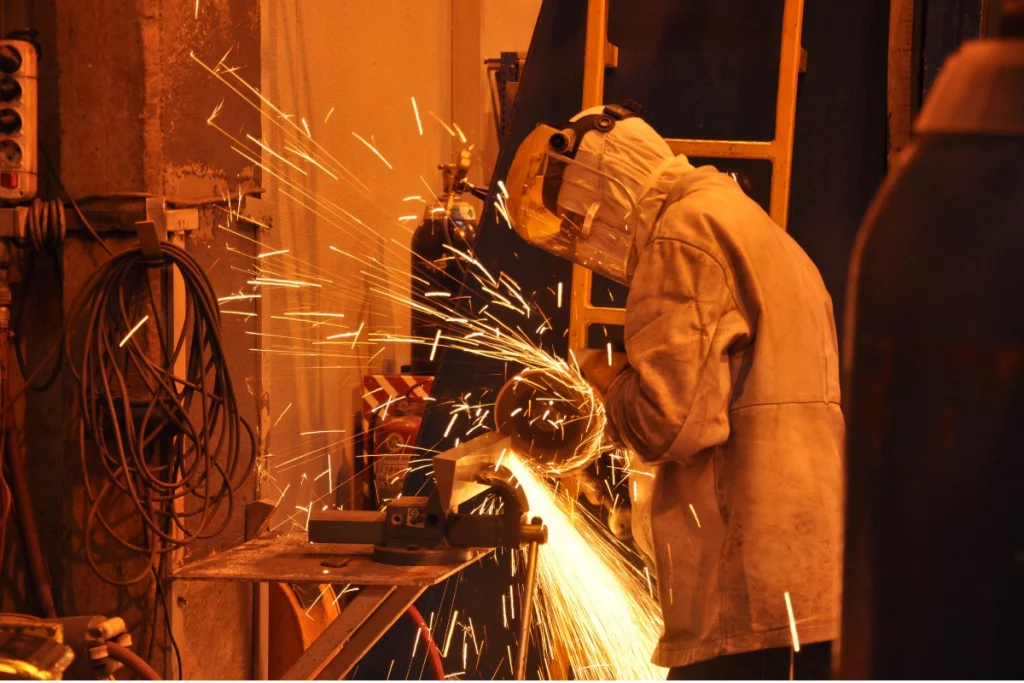
Consider a hot work environment. Hot work covers any task that could generate heat, sparks, or flame — and therefore create a fire or explosion hazard. Common hot work activities include welding, grinding, cutting, brazing, and soldering. In the UK, the HSE requires a hot work permit for these activities. In the United States, OSHA (29 CFR 1910.252) and the NFPA (51B) both require formal hot work permit programs.
Components of a hot work permit include:
Description of the Work Activities Being Performed
The permit must specify exactly what type of work the team will perform and what the intended outcome is. For welding activities, this means documenting the welding process (MIG, TIG, stick/SMAW, etc.). Furthermore, it means recording the materials being joined, the location, and the expected duration. Notably, specificity matters here. A permit that simply states “welding” provides far less protection than one that documents the complete scope of the task.
Documentation of Potential Hazards
The permit must document every foreseeable environmental and process hazard. For hot work, the risk assessment must address sparks and spatter reaching flammable materials. Additionally, it must cover flammable liquids or gases in the work area and combustible dust accumulation. Combustible dust is a leading cause of industrial fires and explosions. Furthermore, the assessment must evaluate inadequate ventilation and live electrical systems in the work zone. Each hazard must receive a likelihood and severity rating before anyone signs the permit.
Safety Measures Taken
The permit must document both pre-work safety preparation and ongoing controls. Pre-work measures for hot work typically include verifying that fire extinguishers are accessible and in-date. Teams must also confirm that flammable materials within the 11-meter (35-foot) exclusion zone have been removed or shielded. Moreover, they should test for combustible gas or vapor concentrations and ensure fire detection systems work properly.
During the work, controls include appropriate PPE such as welding helmets, flame-resistant clothing, and respiratory protection. In addition, a dedicated fire watch must be assigned. Most importantly, post-work monitoring of the area must continue for a minimum of 60 minutes after hot work ceases. Many fire incidents originate from smoldering materials that ignite well after the work is complete.
The more specific and detailed your permit, the more effective it is as a risk control. Not sure where to get started? Use our hot work permit checklist to ensure all relevant work and safety data is captured before permits are completed, reviewed, and signed.

30+ Audit and inspection checklists free for download.
Frequently Asked Questions (FAQs)
What is the difference between a permit to work and a method statement?
A method statement describes how a team will carry out a task. It covers the sequence of steps, resources required, and general safety precautions. However, a permit to work goes further. It is a formal authorization document that confirms the worksite has been assessed and made safe before work begins. The permit specifies time-limited validity and requires sign-off from an authorized person separate from the worker. Moreover, it must be formally closed on completion. Method statements and risk assessments typically inform the preparation of a permit to work. Nevertheless, they do not replace it for high-hazard activities.
How long is a permit to work valid for?
HSE guidance specifies that a permit to work should not be valid for more than 24 hours. In practice, many organizations issue permits for a single shift or a specific work window. As a result, each new period of work requires a fresh permit and a fresh assessment of site conditions. If site conditions change materially during the permit period, the organization must suspend and reissue the permit. For example, this applies when new hazards appear or the scope of work changes.
Who can authorize a permit to work?
A competent person with sufficient authority, knowledge, and training must authorize the PTW. This person must be able to assess the hazards and confirm that adequate controls are in place. Typically, a site manager, EHS professional, or designated PTW controller fills this role. Above all, the authorizing person must not be the same individual carrying out the work. This separation ensures an independent review of safety conditions before work begins.
You may also be interested in:
What Is A Hot Work Permit And How It Works