Summary: A HACCP (Hazard Analysis and Critical Control Points) plan provides a systematic, preventive framework for identifying and controlling biological, chemical, and physical hazards throughout food production. For QA Managers and Quality Engineers overseeing food safety programs, implementing a robust HACCP plan reduces non-conformance rates, improves audit readiness under FDA and ISO 22000 requirements, and […]

ESG Investing: Benefits and Implications for Businesses
Summary: ESG is a measure of how a business manages environmental impact, social responsibility, and governance quality, and ESG investing uses that information to direct capital toward more sustainable companies. In today’s market, what is ESG really about? It is a signal of how well an organization handles risk, accountability, and long-term value creation across […]

Incident Reporting: A Key Component of an Effective Safety Management Program
Summary: Incident reporting is the formal process of documenting workplace incidents, injuries, near misses, and unsafe conditions so management can investigate causes and act on them. Strong incident reporting improves safety because it turns isolated events into usable data for trend analysis, corrective action, and prevention. For EHS teams, a reliable reporting system supports OSHA […]

Kaizen for Continuous Improvement: How it Works
Summary: Kaizen, the Japanese continuous improvement methodology, provides a structured framework of incremental process refinements that directly align with ISO 9001 Clause 10.3 and IATF 16949 requirements for continual improvement. Built on the 5S principles of sort, straighten, shine, standardize, and sustain, Kaizen empowers QA Managers and Quality Engineers to systematically reduce non-conformance rates, improve […]

Food Safety Handling: Taking a Bite Out of Operational Risk
Summary: Effective food safety handling requires comprehensive programs that address every stage of food production — from preparation and packaging to transportation — in compliance with FDA cGMP, HACCP, FSSC 22000, and SQF standards. For QA Managers and Quality Engineers in food manufacturing, a structured food safety handling framework directly impacts audit completion rates, non-conformance […]

5 Tips to Improve Safety Observations and Reduce Workplace Risk
Summary: A safety observation is a structured review of how work is actually being performed so teams can identify safe behaviors, unsafe acts, and gaps in controls before an incident occurs. A strong safety observation program gives EHS managers real-time insight into frontline risk and creates a feedback loop for coaching, corrective action, and continuous […]

Supply Chain Disruptions: What They Are — And How to Avoid Them
A supply chain disruption is any event that interrupts the normal flow of goods, materials, or services between suppliers, manufacturers, and end customers. From geopolitical conflicts and regulatory shifts to natural disasters and cyberattacks, disruptions can range from minor delays to complete supply chain breakdowns. According to the World Bank, global supply chain pressures remain […]

Improving Operational Quality: The Role of Qualitative Risk Assessment
Summary: Qualitative risk assessment complements quantitative data by capturing employees' perceptions of risk severity and likelihood, providing insights that production metrics alone cannot reveal. For QA Managers and Quality Engineers operating under ISO 9001 Clause 6.1 risk-based thinking requirements, combining qualitative and quantitative risk assessments strengthens operational quality, improves non-conformance detection, and drives more effective […]

Toolbox Talks: A Great Tool to Improve Job Site Safety
Summary: A toolbox talk is a short pre-shift safety discussion that focuses workers on the hazards, controls, and safe behaviors tied to the day’s tasks. When done consistently, toolbox talks improve hazard awareness, encourage worker participation, and reinforce OSHA-aligned practices before work begins. For EHS and site leaders, this simple routine strengthens safety culture by […]
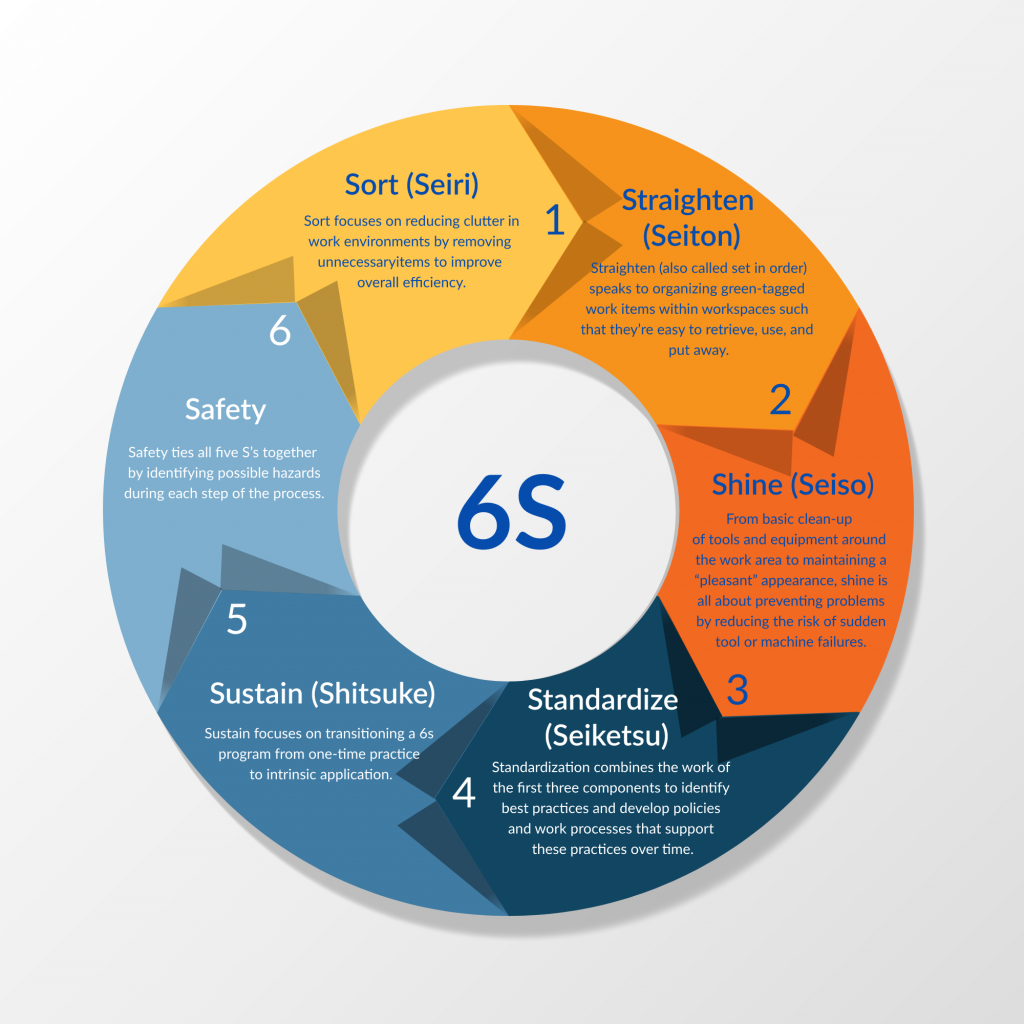
What is 6S Lean — and How Can It Improve Your Operations?
Summary: The 6S system combines the five pillars of 5S — sort, straighten, shine, standardize, and sustain — with a sixth element: safety. For Quality Managers and Process Improvement Leads working under ISO 9001 and IATF 16949, implementing 6S creates a standardized, organized workplace that directly reduces process variation, improves first pass yield (FPY), lowers […]